
A portable power station is the easiest way to get real electricity away from the grid: battery, inverter, charge controller, and a panel of outlets in one sealed box. No wiring, no fumes, no maintenance. But the market has exploded, the spec sheets are written to confuse you, and the difference between a station you'll love for a decade and one you'll resell in a year comes down to about six numbers. We've tested these things in campsites, blackouts, and job sites — here's exactly what to look for in 2026.
What a power station is (and isn't)
Think of a power station as a big rechargeable battery with a built-in inverter for AC outlets, USB ports for devices, a 12V socket for car accessories, and a charge controller that accepts solar input. Sizes run from 250Wh units the size of a toaster to 3,000Wh+ rolling cases that can back up home circuits.
What it isn't: a gas generator replacement for unlimited runtime (it stores energy, it doesn't make it — unless you add solar panels), or a whole-house backup on its own. Know which job you're hiring it for, and the right size falls out naturally.
The two numbers that matter most
Capacity (watt-hours)
Capacity in Wh tells you how much energy is stored. The math is friendly: a 100W device runs about 5 hours on a 500Wh station. But apply two real-world corrections we verify in every test: you'll only get roughly 80–85% of rated capacity through the AC outlets (inverter losses eat the rest), and anything with a compressor or duty cycle (fridges) averages far less than its peak draw. Rough sizing brackets:
- 250–500Wh: phones, laptops, lights, camera batteries, a CPAP for a night or two
- 500–1,200Wh: add a 12V fridge for a weekend, power tools, a TV — the sweet spot for most buyers
- 1,500–2,500Wh: serious basecamp or short home-outage duty: fridge, modem, lights for a day-plus
- 3,000Wh+: multi-day home backup, RV inverter replacement, anything with "whole" in the job description
Output (continuous and surge watts)
Continuous watts determine what the station can run at all. A 500W station cannot run an 800W microwave no matter how big its battery is. Check the wattage label on your most demanding appliance and buy comfortably above it. Surge (peak) watts matter for anything with a motor or compressor, which briefly draws 2–3× its running wattage at startup — a station with weak surge handling will fault out the moment your fridge compressor kicks on.
A pattern worth knowing in 2026: modern stations commonly out-punch their class. The best 1kWh-class units now push 1,800–2,000W continuous — enough for kettles, coffee makers, and most microwaves — where older designs managed half that.
Battery chemistry: make this your filter
This one decision sorts the market better than any other spec. LiFePO4 (lithium iron phosphate) cells are rated for roughly 3,000–3,500 full cycles — a decade of regular use — while older NMC lithium-ion cells are typically rated for about 500–800 cycles. LiFePO4 is also the more heat-tolerant and safer chemistry. It's heavier per watt-hour, which is the one real trade-off.
LiFePO4 is now the standard in nearly every current power station, and prices no longer carry a meaningful premium. Our advice is blunt: for any station you'll use regularly, treat LiFePO4 as mandatory. The main place NMC still makes sense is ultralight units where every pound counts, or deep clearance discounts on outgoing models you'll only cycle occasionally. The full breakdown is in our LiFePO4 vs lithium-ion guide.
Ports: count what you'll actually plug in
Spec sheets list port totals; what matters is whether your loads fit. Walk through a typical evening of use and check:
- AC outlets: three or four beats two — power strips defeat the tidiness of a power station
- USB-C PD at 100W: charges modern laptops at full speed; 60W ports noticeably lag. The best units do 100W in and out of the same port
- USB-A: still useful for older cables and small gadgets
- 12V car socket: essential for CPAP users (with a DC adapter, skipping the inverter doubles runtime) and 12V fridges
- Wireless charging pad: genuinely convenient in a tent, hardly a dealbreaker
Charging: the spec people regret ignoring
How fast a station refills changes how you use it more than almost anything else. Three inputs to check:
Wall charging. Modern stations charge from a wall outlet in 1–2 hours; the fastest hit 80% in under an hour. Older designs using external power bricks take 6–8 hours. If you'll grab the station on the way out the door or top it up between outage waves, fast AC charging is worth real money.
Solar input. This is the ceiling on off-grid self-sufficiency, and it varies wildly: anywhere from 100W to 500W+ in the 1kWh class. A station capped at 150W of solar input takes most of a perfect day to refill; the same capacity with a 500W input refills in 2–3 hours of good sun. Buy more solar input ceiling than you think you need — it's the spec you can't upgrade later.
Car charging. Standard 12V charging is slow (~100W) but turns every drive into useful charge. Some newer units accept 500W+ from alternator-based DC inputs, a big deal for road-trippers.
Features worth paying for
- UPS / pass-through mode: the station sits between the wall and your gear, switching to battery instantly (the best do it in under 20 milliseconds) when power fails. Essential for home-office and CPAP duty.
- App control: genuinely useful, not a gimmick — adjusting charge speed, checking state of charge from inside the tent, and setting charge limits to extend battery life.
- Expandable capacity: some stations accept extra battery packs. If you're torn between sizes, an expandable smaller unit beats overbuying upfront.
- Quiet fans: under load, some stations whine annoyingly. Under ~45dB matters if it sleeps in the tent with you.
- Charge limit settings: capping daily charge at 80–85% measurably extends cell life on any chemistry. Look for it in the app.
Sizing by use case, with our picks
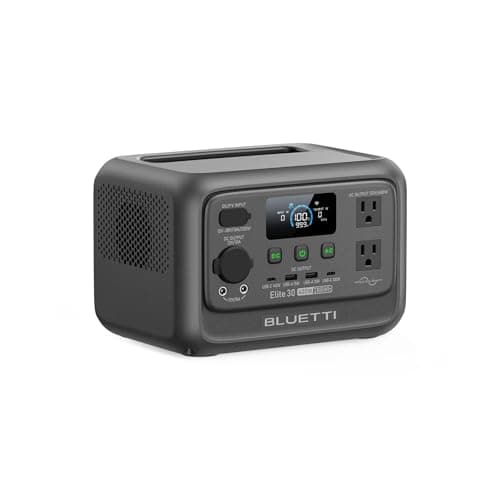
Camping and weekend trips (300–600Wh). Prioritize weight and USB-C; you don't need a big inverter for phones and lights. A sub-10-pound LiFePO4 unit is the right tool:
BLUETTI
BLUETTI Elite 30 V2
The budget LiFePO4 entry point: 288Wh with a surprisingly capable 600W inverter (1,500W lifting mode) in a sub-10-pound body.
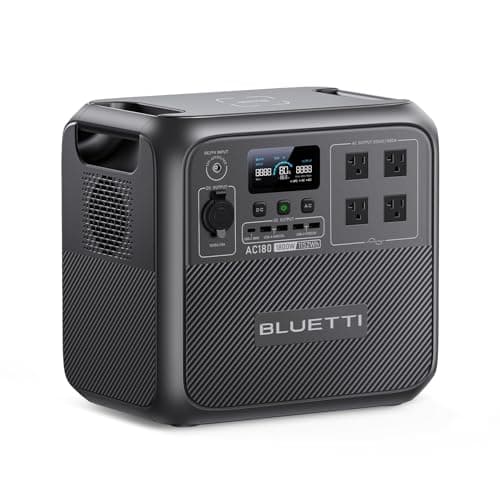
The do-everything unit (1,000–1,200Wh). The class we recommend most: enough capacity for a weekend with a fridge, enough output for real appliances, still one-person portable. Our long-standing favorite all-rounder:
BLUETTI
BLUETTI AC180
Our favorite all-rounder: 1,152Wh of LiFePO4, a real 1,800W inverter, and fast wall charging at a price that routinely undercuts the big names.
Home backup (2,000Wh+). Weight stops mattering; capacity, surge handling, UPS switchover, and solar input dominate. Buy a bundled panel kit so an extended outage doesn't become a countdown timer:

Jackery
Jackery HomePower 3000 + 2×200W Panels
Whole-circuits backup in one box: 3,072Wh of LiFePO4, a 3,600W inverter (7,200W surge), and 400W of folding solar to keep it topped through an outage.
Van and RV life (1,500–3,000Wh). Look for high solar input (500W+), plenty of AC outlets, and expandability. At the top of this range, compare against a DIY battery-and-inverter build — our RV solar installation guide covers when each wins.
Red flags we've learned to walk away from
- No-name brands with spectacular specs. A 2,000W inverter and huge battery at a third of the going rate means corners cut where you can't see them — cells, BMS, and thermal design.
- Chemistry not stated. Brands shout about LiFePO4 when they have it. Silence means they don't.
- No UL or ETL safety certification. Look for UL 2743 (the portable power station standard) or equivalent ETL listing. Uncertified units have no independent safety review, and some insurers care.
- Warranty under 3 years. LiFePO4 stations from serious brands carry 5-year warranties now. A short warranty tells you the maker's own expectation.
- Cycle ratings with no capacity threshold. "Rated for 6,000 cycles" without "to 80% capacity" attached is marketing, not engineering.
A word on solar panels
Most stations charge from any brand's panels via standard connectors, but check the input voltage range and connector type before assuming. Bundled "solar generator" kits cost slightly more than piecing parts together and remove all compatibility guesswork — worth it for a first system. Either way, panel watts should be at least a third of battery watt-hours (e.g., 400W of panel for a 1,200Wh station) if you want genuine off-grid refilling rather than a trickle.
Power station vs. gas generator: an honest comparison
Plenty of buyers arrive here from the generator aisle, so let's settle the comparison fairly. A power station wins on everything about the experience: silent, fume-free, zero maintenance, safe indoors, and instant — no pull cords, no stale fuel, no carburetor to gum up between emergencies. For nighttime campground use, apartment dwellers, and anyone storing backup power inside the home, it isn't close.
A gas generator wins on sustained watts per dollar. A modest inverter generator produces 2,000W continuously for as long as you feed it gasoline — replicating that output for days on batteries alone costs several times as much. For powering an air conditioner through a week-long outage, gas (or dual-fuel propane) still earns its keep.
The combination most serious preppers and full-timers land on: a LiFePO4 power station with solar for daily, silent duty, plus a small generator as the bad-weather insurance policy — often charging the station in an efficient one-hour burst rather than running all night. If you only buy one, buy the power station; you'll use it fifty times for every time you'd have started the generator.
Think in cost per year, not sticker price
The spec sheets hide the most useful number, so do this math before comparing anything. Take whatever a unit costs, divide by realistic years of service, and the rankings reorder themselves.
A LiFePO4 station rated for 3,000+ cycles, used a few times a week, plausibly serves a decade or more. An NMC-based station rated around 500 cycles, used the same way, shows meaningful fade inside two to three years. Even when the NMC unit is noticeably cheaper at checkout, it routinely costs two to three times as much per year of service — and that's before counting the second purchase. The math flips only for genuinely occasional users (a few cycles a year), where calendar aging retires both units on a similar schedule and the discount unit is rational.
The same lens prices features honestly. Fast solar input adds a little to the purchase, but if it's the difference between the station refilling daily off-grid or not, it's the cheapest capacity you'll ever buy. A 5-year warranty versus 2 isn't a perk — at typical failure rates it's the manufacturer absorbing the risk years 3 through 5, which has direct dollar value.
How we test and rate power stations
So you can weight our recommendations appropriately: our ratings come from use, not spec sheets. We verify usable AC capacity by running measured loads to shutdown (this is where the 80–85% rule comes from), check inverter claims against startup surges from real compressors and tools, time wall and solar recharges, and listen to fan behavior at the loads you'd actually run. Then the units go into rotation — campsites, outage duty, tailgates — because the flaws that matter (confusing interfaces, screens unreadable in sunlight, firmware quirks, handles that dig into your palm) only show up in month three. Our ratings move when long-term behavior earns it, and the cons lists on our product cards are the things we'd warn a friend about.
The bottom line
Filter to LiFePO4, size capacity to your real daily watt-hours (then add a third), make sure continuous output covers your biggest appliance with surge headroom, and weight the tiebreakers toward fast charging and high solar input. Do that, and every station left on your list is one you'll be happy with — the rest is price-watching.
Where to go next
See our best portable power stations for the specific units that survived our testing this year, and if you're choosing between the two big chemistries, our LiFePO4 vs lithium-ion comparison settles it with numbers.