
Jackery
Jackery Explorer 300
293Wh300W ACLi-ion
7.8The grab-and-go pick: 293Wh at just over 7 pounds, enough to keep phones, cameras, and a laptop charged all weekend.
Updated June 2026

Dominick DePaola
Off-grid power editor at RoverSolar
Camping power is a weight problem first and a watts problem second. The station that powers everything is worthless if it stays home because it's a 35-pound deadlift, so this list is ordered around what we actually carry: sub-10-pound units for ordinary weekends, with bigger batteries reserved for basecamp trips where the truck parks next to the table. We still hold every pick to our usual standards — LiFePO4 chemistry where the budget allows (3,000+ cycles versus roughly 500 for Li-ion), honest inverter ratings, and warranties of three to five years.
Be realistic about campsite loads. Phones, headlamps, a laptop, camera batteries, a CPAP, and a string of lights add up to far less than people think — usually under 300Wh a weekend. Fridges, induction burners, and heaters are a different sport that demands the basecamp class. We've matched each pick to the trip it actually serves.
Jackery
The grab-and-go pick: 293Wh at just over 7 pounds, enough to keep phones, cameras, and a laptop charged all weekend.

Anker
A tidy starter kit: 288Wh LiFePO4 with 140W two-way USB-C and a packable 60W panel — perfect for tailgates and weekend sites.

Jackery
A weekend-camping classic: 518Wh and a single 500W outlet in a lunchbox-sized package with a sturdy carry handle.
BLUETTI
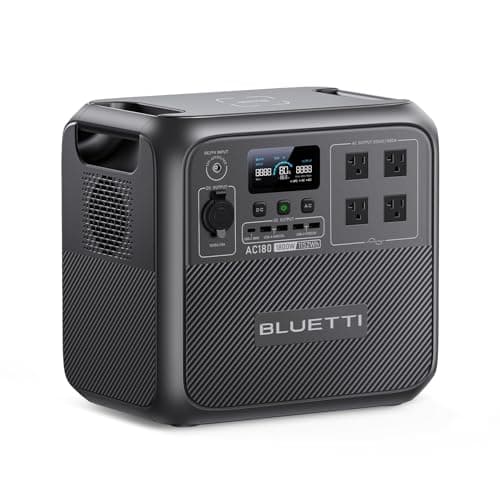
Our favorite all-rounder: 1,152Wh of LiFePO4, a real 1,800W inverter, and fast wall charging at a price that routinely undercuts the big names.

LuminAID
The packable lantern that started it all: inflatable, waterproof, solar-charged light that flattens to pancake size in a pack.
For the camping most people actually do — car camping, two or three nights, phones and lights and a laptop — the Elite 30 V2 is the sweet spot we kept reaching for. It's 9.7 lb, so it goes from trunk to table in one hand, and its 288Wh covers a weekend of device charging with room to spare. What separates it from every other sub-10-pound station: LiFePO4 cells with a 5-year warranty, and a 600W inverter whose power-lifting mode runs 1,500W resistive loads — morning coffee from an electric kettle at a tent site is a real luxury. The trade-off versus the Explorer 300 below is 2.6 lb. In exchange you get double the output and roughly six times the cycle life. Unless every pound counts, this is the one.
At 7.1 lb the Explorer 300 is the lightest station here that still delivers genuine AC power — two outlets pushing 300W — rather than just USB ports. That weight changes behavior: it gets tossed in for day trips and paddle-in sites where the Elite 30 V2 might get second-guessed. The 293Wh capacity matches the budget pick almost exactly, and the 60W USB-C PD port charges laptops directly without touching the inverter. What you give up for those 2.6 saved pounds: Li-ion cells with a fraction of the LiFePO4 cycle life, a 3-year instead of 5-year warranty, and half the AC headroom — no kettle tricks here. Buy it if weight is the deciding spec and your loads are devices, not appliances. Heavy users should spend on the BLUETTI instead.
If you want the whole campsite-power problem solved in one purchase, this bundle is it: a 9.3 lb, 288Wh LiFePO4 station plus a packable 60W folding panel, so the battery that drains on Friday refills itself on Saturday. The station's standout feature is its 140W bidirectional USB-C — it fast-charges your laptop in the field and fast-charges itself from a wall charger the night before you leave. The honest limitation is the panel: 60W against 288Wh means a full refill needs most of a sunny day, so treat it as a top-up tool, not an infinite battery. Versus buying the Elite 30 V2 alone, you pay more but leave nothing else to buy. For weekend campers who want true off-grid independence on the first trip, start here.
The Explorer 500 fills the gap between weekend-device duty and basecamp power: 518Wh — nearly double the 300-class picks — at 13.3 lb that still carries comfortably in one hand like the lunchbox it resembles. This is the capacity tier where CPAP campers land (two nights with margin at typical 30–60W draws) and where longer trips without solar stop being a rationing exercise. The compromises are age-related: a single AC outlet means choosing what plugs in, the Li-ion cells trail modern LiFePO4 on lifespan, and the 100W solar input cap makes panel charging slow. We'd like to see Jackery update it. But the shape, the quiet operation, and the proven track record keep it on the list — it's the right size for a lot of real trips.
When the vehicle parks at the site and stays there, weight stops mattering and the AC180's 35.3 lb buys you a different category of camping: 1,152Wh of LiFePO4 running an 1,800W inverter. That's an electric kettle, a 12V fridge for the whole trip, an induction burner, a projector for movie night — actual basecamp comfort, not just charged phones. The 500W solar input matters most here: paired with serious panels it refills in a single sunny day, making week-long stays self-sufficient. The 45-minute 0–80% wall charge means even a forgotten battery is ready before you finish packing. The trade-offs are the obvious one — you will not be carrying this anywhere — and a fan that's audible under load. For drive-up sites, group trips, and trailers, it's the anchor.
Not a power station — a reminder. Every watt-hour your lantern doesn't pull from the battery is a watt-hour for things only the battery can do, and the LuminAID solves campsite light for zero watt-hours: it's an inflatable, fully waterproof solar lantern that packs flat to pancake size, weighs ounces, and recharges itself on the dashboard or a pack strap during the day. It floats, so it survives the kayak and the cooler full of melted ice. The honest limitation is its appetite for sun — a full charge wants a full bright day, so in gray weather you'll ration it or top it off briefly via USB from your station. We clip one to the tent and one to the table on every trip. At this price, buy two.
| Spec | 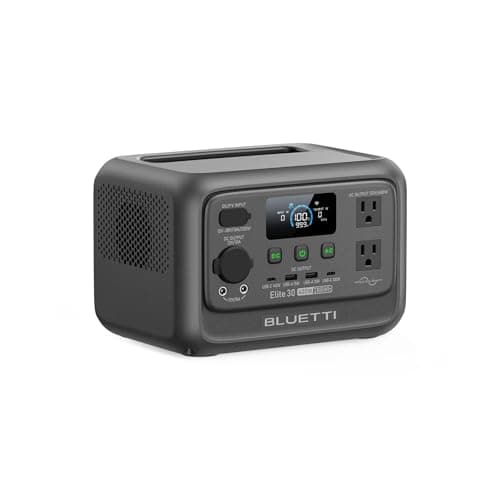 | | | | |
|---|---|---|---|---|---|
| Capacity | 288 Wh | 293 Wh | 288 Wh | 518 Wh | 1,152 Wh |
| AC output | 600 W | 300 W | 300 W | 500 W | 1,800 W |
| Surge | 1,500 W | 500 W | 600 W | 1,000 W | 2,700 W |
| Chemistry | LiFePO4 | Li-ion | LiFePO4 | Li-ion | LiFePO4 |
| Weight | 9.7 lb | 7.1 lb | 9.3 lb | 13.3 lb | 35.3 lb |
| Solar input | 200 W | 90 W | — | 100 W | 500 W |
| Panel | — | — | 60 W | — | — |
| Warranty | 5 yr | 3 yr | 5 yr | 3 yr | 5 yr |
| Check Price at BLUETTI | Check Price on Amazon | Check Price on Amazon | Check Price on Amazon | Check Price at BLUETTICode AFF5OFF at checkout |
For phones, headlamps, a laptop, and camera batteries, a weekend rarely uses more than 200–300Wh, so a 288–300Wh station like the Elite 30 V2 or Explorer 300 covers it with margin. Add a CPAP and you want 500Wh-plus. Add a 12V fridge — roughly 300–500Wh per day — and you're in 1kWh basecamp territory like the AC180.
Most CPAPs draw 30–60W with the heated humidifier off, which works out to roughly 250–450Wh per night through an inverter. A 518Wh station like the Explorer 500 reliably covers two nights; a 288Wh unit covers one. Turn off humidification and run the machine from the 12V port with a DC adapter and you can stretch runtimes 20–40% further.
No full-size station on this list can fly. TSA caps carry-on lithium batteries at 100Wh without approval and 101–160Wh with airline approval, and even the smallest pick here is 288Wh. Checked baggage is also prohibited for loose lithium batteries. Fly-in campers should carry a sub-100Wh USB power bank and plan around it, or rent equipment at the destination.
Yes, and it's one of the best uses for one. A quality 12V compressor fridge averages 30–60W while cycling, so a 1kWh station like the AC180 runs one for a couple of days, or indefinitely with a 200W solar panel attached. Run the fridge from the 12V car port rather than AC to skip inverter losses — it adds meaningful runtime.
Avoid it when you can. Most stations are rated to operate up to about 104°F, and a closed car in summer sun can pass 140°F — heat at that level accelerates battery wear and can trigger protective shutdowns. Park in shade, crack windows, keep the unit out of direct sun under a blanket, or carry it to the site. Cold is gentler: most units discharge fine below freezing but refuse to charge until warmed.