Hands-On Review
Anker SOLIX C300 Review (2026): Starter Kit Done Right
Our field review of the Anker SOLIX C300 + 60W panel kit: 288Wh LiFePO4, 140W two-way USB-C, and a packable panel — the tidiest small starter bundle.

Dominick DePaola
Off-grid power editor at RoverSolar · June 11, 2026
Who It's For
This kit is for the first-time buyer who wants the whole solar-power experience — station, panel, cables — in one purchase that doesn't require a spreadsheet. At 9.3 pounds for the station and a folding 60W panel that packs flat, the C300 kit suits weekend campers, tailgaters, beach days, and emergency kits where the goal is keeping phones, laptops, lights, and cameras alive rather than running appliances.
It's also the right pick for buyers thinking in years instead of trips. The LiFePO4 cells are rated for thousands of charge cycles and Anker backs the kit for 5 years — both a clear step ahead of the Li-ion Jackery Explorer 300, which is this kit's most direct rival. If you'll cycle the unit weekly, that chemistry difference is the whole ballgame.
The sleeper audience is USB-C-first households. The C300's two USB-C ports push up to 140W — enough to fast-charge even big laptops at full speed — and the same port fast-charges the station itself. If your gear is modern, you may rarely touch the AC outlets at all.
Who should skip it: anyone with AC appliance ambitions. The 300W inverter rules out kettles and heaters, and CPAP users get about one night. For more inverter at this size, see the BLUETTI Elite 30 V2.
Capacity and Output in Practice
The station stores 288Wh, which through the AC inverter at roughly 85% efficiency yields about 245Wh of usable output. On the USB side, efficiency runs higher, and that's where this unit shines. The practical translation: around 20 phone charges at ~12Wh each, about four full laptop charges at ~60Wh over the 140W USB-C ports, and a weekend's worth of headlamps, earbuds, drones, and camera batteries without thinking about it.
For CPAP duty, a machine drawing about 30W without its humidifier runs roughly eight hours — one full night. That makes the C300 a solid one-night backup or a single-night camping solution, but not a multi-night CPAP plan unless the bundled panel can refill it each day, which requires reliable strong sun.
The AC inverter is rated at 300W continuous with 600W surge. That comfortably covers a laptop brick, a fan, a TV, a CPAP, or a small projector for movie night. It will not run a kettle (1,200–1,500W), a hair dryer, or a space heater, and a 50W 12V fridge — while technically within the inverter's ability — would exhaust the pack in around five hours of compressor runtime. The right mental model: this is a USB powerhouse with an AC outlet for occasional small loads, not a generator.
Charging: Wall and Solar
Let's start with the kit's honest limitation: the bundled panel is 60W. Real-world output from a 60W folder in strong sun runs around 40–45W, which means refilling the 288Wh station from empty takes roughly six to seven hours of quality sunlight — essentially a full solar day, and noticeably longer under haze or clouds. Anker's own catalog concedes the point: 60W is slow for this capacity in anything but ideal weather. Used as intended — topping up each day's phone and laptop draw rather than rescuing a dead station — it works fine, and the panel's packability is the compensation. It folds small enough to genuinely come along.
Wall and USB-C charging are the kit's quiet superpower. The 140W two-way USB-C fast-charges the station itself, which at this capacity means going from low to full in well under a workday from any capable USB-C source — including the same charger that feeds your laptop. That makes pre-trip prep nearly instant and lets one premium GaN charger serve your whole kit.
The car socket covers charge-while-driving duty. Our field pattern: charge via USB-C the night before, drive-charge to the site, and let the 60W panel hold the line during the day. Run it that way and the panel's modest wattage almost never matters.
Build and Portability
The station weighs 9.3 pounds — a genuine one-hand carry, two pounds heavier than the Jackery Explorer 300 but slightly lighter than the BLUETTI Elite 30 V2, and the difference among the three is honestly noise in practice. Anker's build quality shows in the usual places: tight housing seams, a confident handle, buttons with positive clicks, and a display that's legible in daylight.
The port selection is the most modern in this class: two AC outlets, two USB-C ports delivering up to 140W, two USB-A ports, and a 12V car socket. Two USB-C ports at real wattage is exactly what current gear wants, and it's a spec the Explorer 300 (one USB-C at 60W) can't answer. Eight devices can draw simultaneously across the array, which covers a family campsite from one box.
The folding panel weighs little, packs flat against a backpack or behind a seat, and sets up in seconds. Its fabric and stitching feel sturdier than its price class suggests, though the kickstand arrangement wants flat ground and calm air — at 60W it's a smaller sail than its big siblings, but a gust can still tip it. Lean it against a cooler at a low angle and it behaves. As a package, station plus panel travels lighter and tidier than any other complete kit we've tested.
What We'd Change
The panel is the obvious change, and we'll say it plainly: this station deserves 100W. At 60W, the bundled panel needs a perfect day to fully refill the 288Wh pack, and in mixed weather it falls behind even modest daily usage. Anker presumably chose 60W for pack size and price, and the panel is admirably portable — but a 100W option in the same bundle would transform the kit from "solar top-up" to "solar self-sufficient" for its target loads. If Anker offered the choice at checkout, we'd tell every buyer to take it. As is, heavier users should budget for a second or larger panel, which partly erodes the buy-once appeal of a kit.
Second, the AC inverter is honest at 300W but unambitious. The BLUETTI Elite 30 V2 squeezes a 600W inverter with a 1,500W lifting mode into the same weight class, which unlocks brief kettle-and-cooker duty this Anker simply can't attempt. For a USB-first unit that's a defensible trade — but it's a real gap on the spec sheet.
Last, a small one: at this size we'd love a wireless charging pad on top, a feature bigger stations have normalized. None of these change our recommendation; they define its edges. Buy this kit knowing the panel is a trickle, not a firehose.
The Verdict
The SOLIX C300 kit earns its 8.3 rating by getting the fundamentals of a starter kit right: long-life LiFePO4 chemistry, a 5-year warranty, the best USB-C implementation in its class, and a complete station-plus-panel package light enough to actually travel. For the camper or emergency-kit builder whose loads are phones, laptops, lights, and cameras, this is the small kit we'd buy in 2026.
Against its rivals the lines are clean. The Jackery Explorer 300 is two pounds lighter and often cheaper, but its Li-ion cells, 3-year warranty, and single 60W USB-C port mark it as the previous generation; the Anker beats it everywhere except the scale and the panel-less price tag. The BLUETTI Elite 30 V2 is the spec-sheet bruiser — 600W inverter, 1,500W lifting mode, 200W solar input — and the better pick if AC output is your priority, but it ships without a panel and its early units lacked app support.
The Anker's case is coherence: everything in the box works together, charges fast over one cable standard, and will still be cycling happily years from now. Our advice is the same one we follow ourselves — run the panel as a daytime top-up, lean on 140W USB-C for real charging, and this kit will quietly outlast the trips you bought it for.
How it stacks up
| Spec |  | 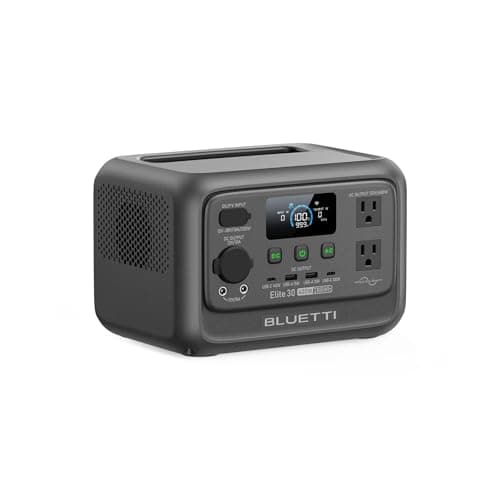 |  |
|---|---|---|---|
| Capacity | 288 Wh | 288 Wh | 293 Wh |
| AC output | 300 W | 600 W | 300 W |
| Surge | 600 W | 1,500 W | 500 W |
| Chemistry | LiFePO4 | LiFePO4 | Li-ion |
| Weight | 9.3 lb | 9.7 lb | 7.1 lb |
| Solar input | — | 200 W | 90 W |
| Panel | 60 W | — | — |
| Warranty | 5 yr | 5 yr | 3 yr |
| Check Price on Amazon | Check Price at BLUETTI | Check Price on Amazon |
Frequently asked questions
How many charge cycles does the Anker SOLIX C300 last?
The C300 uses LiFePO4 cells, rated for thousands of full charge cycles — roughly a decade of regular use — and carries a 5-year warranty. That's a major longevity edge over Li-ion rivals like the Jackery Explorer 300, which typically fade after several hundred cycles.
Can the SOLIX C300 run a CPAP all night?
Yes, for one night. A CPAP drawing about 30W without its humidifier runs roughly eight hours on the station's ~245Wh of usable AC output. For multi-night trips you'd need strong daily sun on the 60W panel to refill it, or a larger 1kWh-class station.
Can the SOLIX C300 charge a laptop?
Exceptionally well — it's the kit's best trick. The two USB-C ports deliver up to 140W, enough to fast-charge even large laptops at full speed with no inverter losses. Expect about four full laptop charges (~60Wh each) per charge of the station.
Can I fly with the Anker SOLIX C300?
No. Airline rules cap carry-on batteries at 100Wh, or 101–160Wh with airline approval, and the C300's 288Wh pack exceeds both. The 60W folding panel contains no battery and can fly fine — but the station itself must travel by road.
See every pick: The Best Power Stations for Camping in 2026 →